The Malagueña dance that was first introduced to the people of Marinduque has evolved and changed, which translated into many forms, one of which is the Malagueña of nearby Catanauan, Quezon.

The Malagueña dance that was first introduced to the people of Marinduque has evolved and changed, which translated into many forms, one of which is the Malagueña of nearby Catanauan, Quezon.

Maidens of the Tawi-Tawi islands displaying agility and grace of arm movements in this very languorous and fluid dance. The exotic make-up, brocade tops and pantaloons are signs that this group has been heavily influenced by trade with Arabs from the East.

A Social Dance from Masbate , Specifically in Bantigue Island where the performers imitates the movement of Lapay Birds or Sea Gulls that dominates the Island
Known as a divertissement for the comedia stage play during the Spanish times, the Lanceros de Tayabas of Quezon was a dance interpretation of the Lancers and chivalrous knights of King Arthur.
European and other Western culture gained foothold in the Philippines making it a melting pot of racial and cultural ingredients. Finding its way into the indigenous Filipino’s dance tradition, Spanish “jotas,” “flamencos,” “fandangos,” and “polkas” were soon Filipinized.
A Filipinized French quadrille proudly claimed by the Agta of Iriga.claimed has that the lanceros is learned by the present agta from their fathers and forefathers who works a farmhands in big land holdings owned by Spaniards.
A version of the jota that became popular in the 19th century, the La Jota Quirino or the Jota dedicated to the province of Quirino distinguished itself from other versions of the jota

On June 12, 1898 , Philippine Independence was proclaimed by General Emilio Aguinaldo in Kawit, Cavite and Euphoric crowds tools to the streets.

A Dance inspired by the Baro’t Saya costume of the Ilocanos with some versions using Spanish castanets . The Islanders perform the rare Jota in warm clothing appropriate for the cold damp weather of the Island.
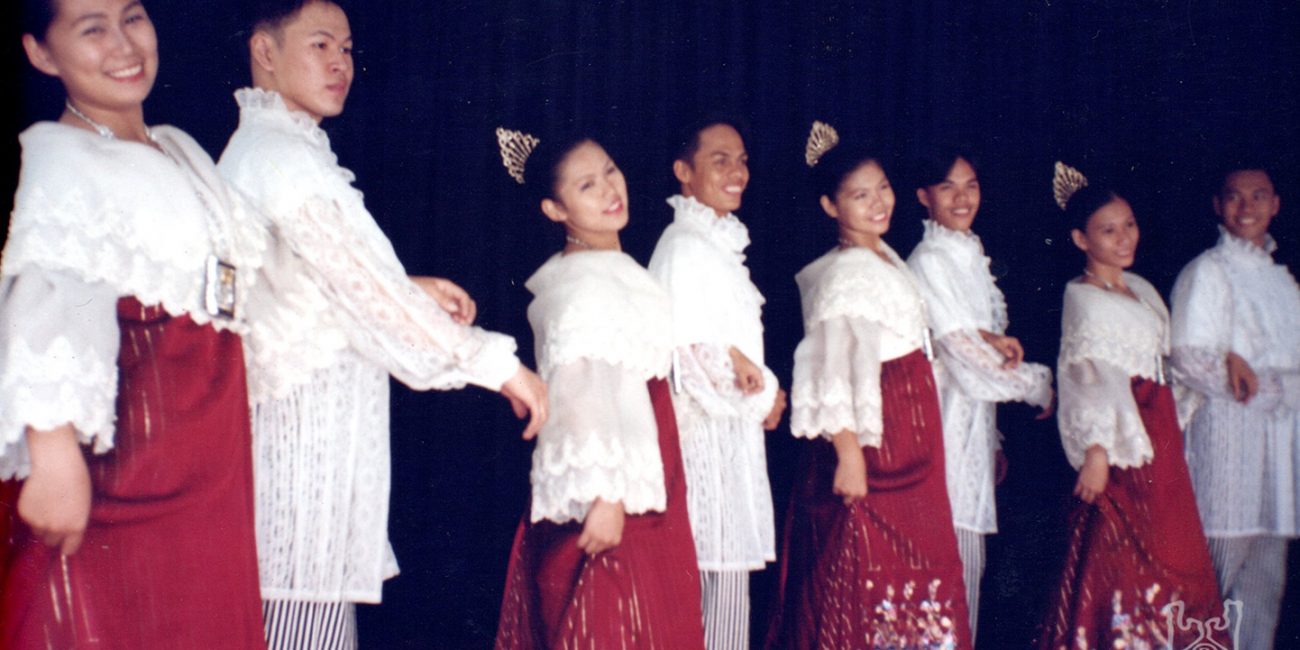
Is a fine example of Filipinized Jota but unlike all jota does not used elongated bamboo castanets to take the place of traditional Spanish castanets